Week 02 · September 28, 2026
Building the Light Bank
The plumbing and rack problems are handled. Week two starts with three more Radions on the floor, five fixtures in hand, and a cycle that is finally moving through every stage.
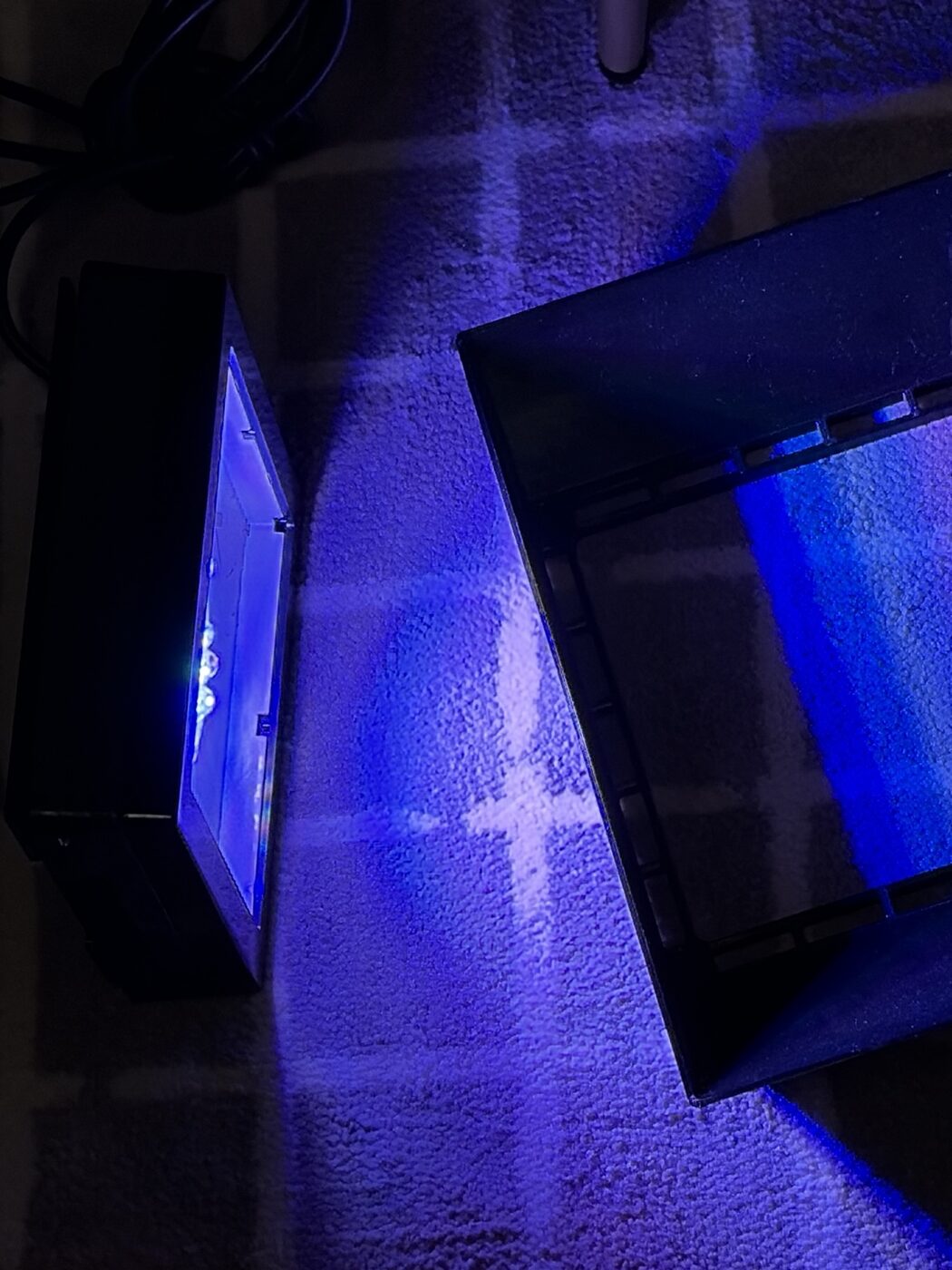
Week one ended with the farm circulating, the return plumbing glued, the drain protected, and the multilevel rack finally staying where I put it. Those are no longer open problems.
Today, three additional Radions arrived. They look different from the two fixtures I already had, so the next job is identifying the exact generations and deciding whether the final layout should use all five or keep one as a spare. Either way, lighting coverage is no longer the bottleneck it was at the beginning of this build.
The cycle is becoming a cycle
After seven days, the system is no longer just holding ammonia. Nitrite is measurable and nitrate has appeared. That means the biological filter is developing, even though the farm is not ready for coral yet.
I dosed more Stability and I am continuing to test. The threshold stays the same: ammonia and nitrite need to reach zero and remain there under the existing fish load before I add cleanup crew or coral.
September 28 night test
Tonight's September 28 readings were ammonia 1 ppm, nitrite 0.25 ppm, and nitrate 5 ppm. I dosed more Activate afterward and may do a water change in the morning. The nitrate reading is now corrected in the cycle record.
September 29: another water change
Ammonia had climbed back to about 2 ppm, so I did another small water change. The post-change test settled at 1 ppm ammonia, 0.25 ppm nitrite, and approximately 5–10 ppm nitrate. I am continuing to dose Activate while the biofilter catches up. Nitrite is present but has stayed modest rather than producing the dramatic spike I expected.
Radion update trouble
The three newly arrived Radions worked earlier in the day, but after updating them two stopped powering on normally. The affected fixtures flash red once when connected and then remain off. Lighting hardware is therefore back on the troubleshooting list; the exact models/generations still need to be confirmed before I finalize the five-light layout.
October 1: ammonia keeps falling
The cycle continued moving in the right direction. The October 1 test read roughly 0.5–1.0 ppm ammonia, 0.25 ppm nitrite, and 5–10 ppm nitrate. At this point the goal is patience rather than trying to force the finish: keep the system stable and let the biofilter catch up.
October 3: getting close
By the October 3 test, ammonia was down to approximately 0.25–0.5 ppm and nitrite was approximately 0.25–0.5 ppm, while nitrate had climbed to roughly 10–20 ppm. That is the clearest sign yet that the first cycle is maturing: the original ammonia load is being processed and nitrate is accumulating downstream.
The system is also starting to look less sterile. The filter socks are developing brown coloration and the skimmer is beginning to show signs of biological activity. I am out of bottled bacteria for now and am leaving the tank largely alone instead of continually intervening.
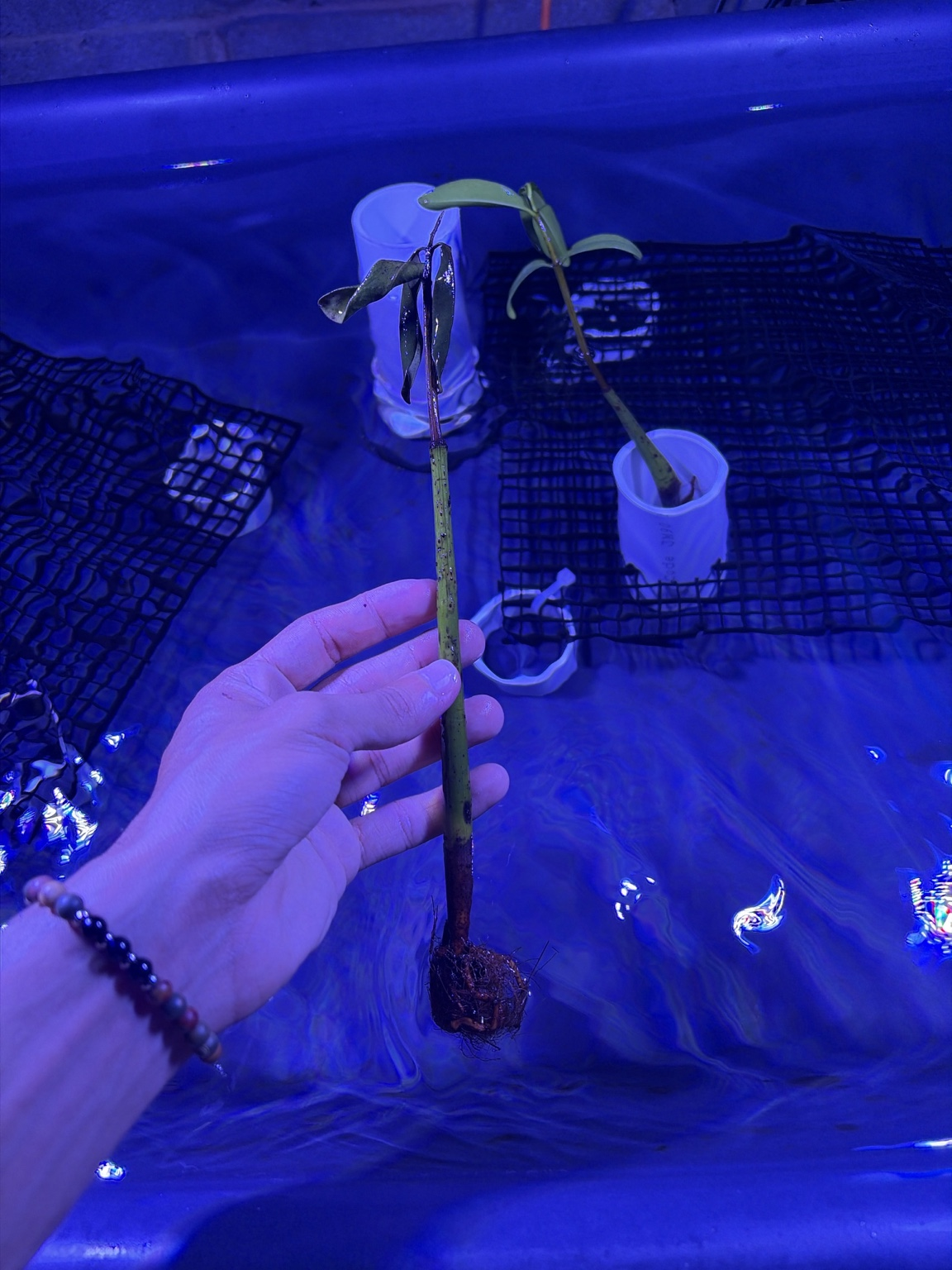
Mangrove update
One of the mangroves appeared to decline this week, while the other remains healthy. I cut a hole in the frag rack to hold its PVC support vertically, which gives the remaining mangrove a cleaner and more stable position above the system.
Resolved going into week two
The main drain now has a pipe strainer, so a fish or large piece of debris cannot obstruct the standpipe the way the first damsel did. The multilevel frag rack is also built and stable. Those jobs move from the problem list to routine inspection and maintenance.
October 4: Alquatics moves to Cloudflare
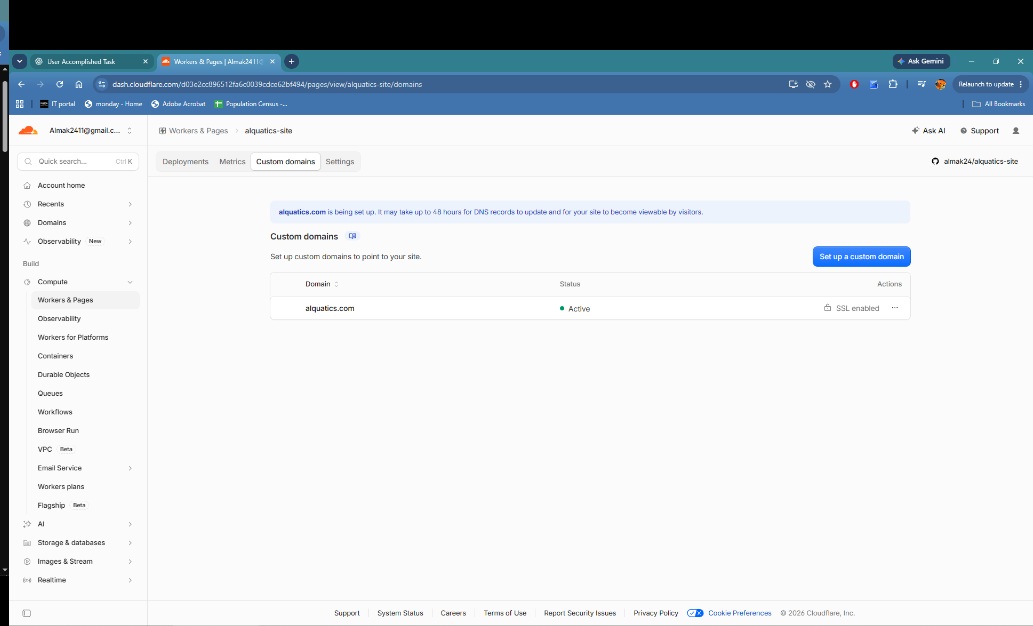
Today I moved the site deployment pipeline off Netlify and onto Cloudflare Pages. The custom domain, alquatics.com, is now active with SSL enabled and connected directly to the GitHub repository.
The practical change is bigger than the infrastructure sounds: site updates are no longer bottlenecked by Netlify deploy credits. I can go back to treating this log like an actual daily build journal. New water tests, system changes, equipment problems, fixes, and milestones can be committed to GitHub and deployed through Cloudflare as they happen.
The first test of the new pipeline was this week's cycle update. I added the October 1 and October 3 water tests to the permanent cycle history and expanded this entry with the latest biological and mangrove observations. The GitHub commits deployed successfully to the live site — the new pipeline works.
What comes next
The immediate work is less dramatic than drilling a trough, but it matters more for the animals: keep temperature steady, verify water tests consistently, identify and mount the Radions, and wait for the cycle to finish without forcing it.